eShepherd by Gallagher
Virtual fencing for land that cell service doesn't reach.
LoRa (Long Range) connectivity puts coverage on your property — so you can run eShepherd across remote rangelands, complex terrain, and seasonal allotments where cell service isn't reliable.
Is LoRa the right fit?
LoRa is the right choice when cellular coverage is absent, inconsistent, or unreliable across your grazing area.
LoRa is likely the right fit if:
• Cell service is patchy or absent across your property
• You graze on remote rangelands, allotments, or public land
• You're running large herds across vast or broken terrain
• Conventional fencing is expensive or impractical where you run cattle
If you can reliably use your phone across your grazing area, eShepherd's cellular option may be a simpler fit. Our team will assess both options for your property before you commit to anything.
How the LoRa system works
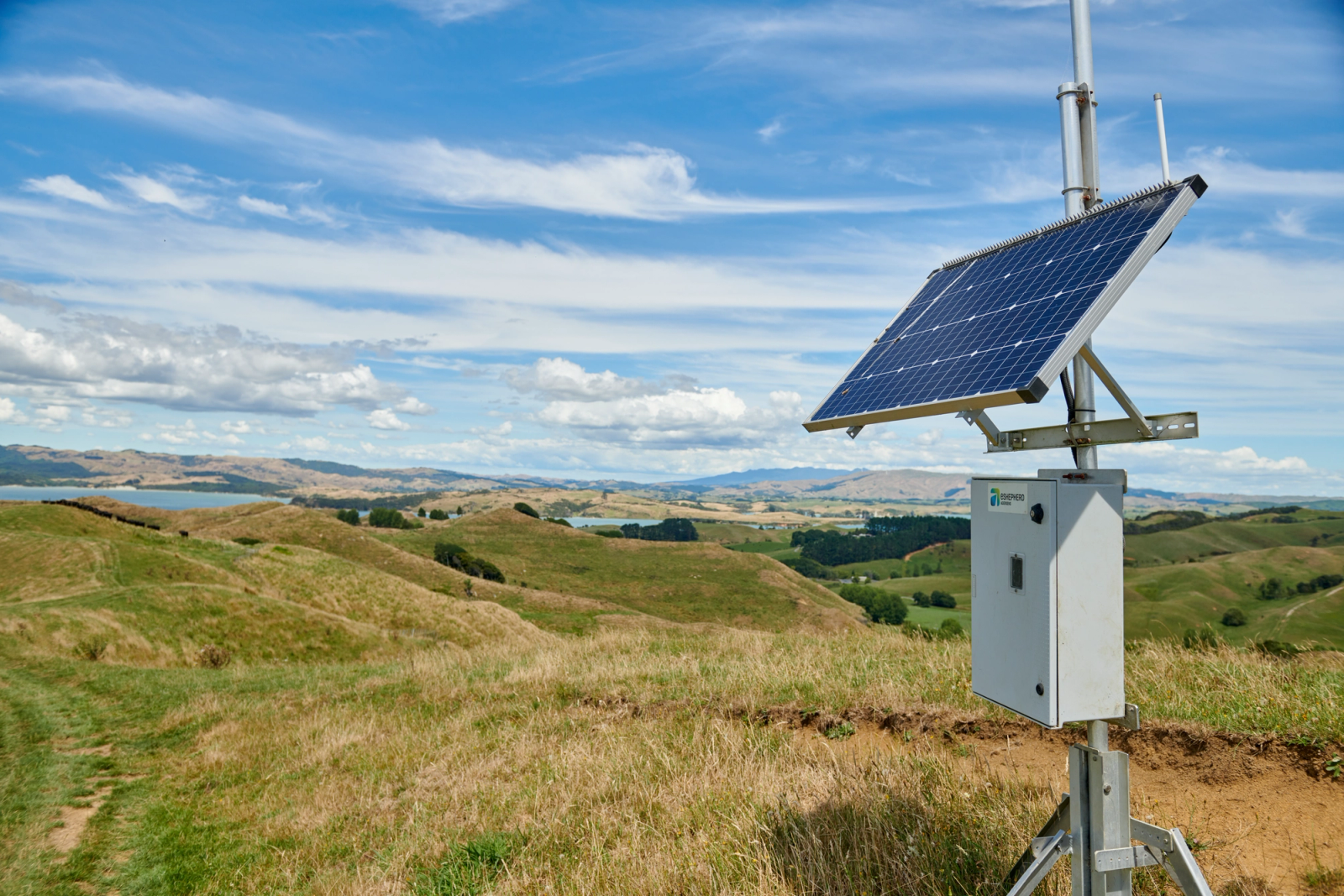
Base stations go on your property and s are installed at locations assessed by the eShepherd team for your specific terrain. They communicate with neckbands across your grazing area using long-range radio to minimize reliance on carrier networks.
Neckbands manage containment Virtual fence boundaries are stored directly on each neckband. The collar enforces the boundary — audio cue first, then pulse — whether or not it's actively connected to a base station. Cattle stay contained even in patchy coverage areas; data syncs when they reconnect.
You manage everything from the app Move paddock boundaries, monitor animals, and review grazing history from the eShepherd web or mobile app. Changes reach neckbands over LoRa within minutes — no posts to pull, no wire to roll.
LoRa coverage depends on terrain, vegetation, and base station placement. Hilly or heavily timbered country affects radio range. That's exactly why we assess every property before installation — so coverage is designed for your land, not assumed.
Why LoRa
Virtual fencing where it wasn't possible before
LoRa is purpose-built for operations beyond the reach of cellular networks. If you've written off virtual fencing because of your coverage situation, this changes that.
Coverage with more control
Base stations are positioned on your property for your terrain — not dependent on where a carrier decides to build a tower. Coverage gaps are addressable because the infrastructure is yours to place.
Proven on complex terrain
The system is designed to perform across ridges, valleys, and broken country. Strategic base station placement delivers reliable containment in the landscapes where conventional fencing is hardest to maintain.
Predictable long-term costs
One-off hardware purchase, low monthly connectivity fee, 7–10 year neckband design life. No per-head subscription, no lease, no surprise infrastructure costs. The base station investment spreads across your herd and acreage over time.
Free property assessment — included with every LoRa inquiry
We assess your property before you buy.
Before recommending LoRa, the eShepherd team maps your terrain, grazing areas, and coverage requirements. We identify where base stations should go and estimate how many you need — so you get an accurate quote and a system designed for your land, not a generic install.
What the assessment covers:
• Terrain and topography review
• Base station placement recommendations
• Coverage area mapping
• Connectivity and quote estimate
No obligation. The assessment is part of the conversation, not a commitment.
Built for producers running cattle in remote areas
Large commercial cow-calf operations Running large herds across remote rangelands in the U.S. intermountain West, Great Plains, or western Canada. • No cell coverage across your grazing area • High cost or impracticality of conventional fencing at scale • Large herd where per-head investment needs to make sense
Public land and allotment graziers Grazing on Forest Service or BLM allotments (U.S.) or Crown land (Canada) — remote country where infrastructure is limited. • Remote allotments far from cell towers • Conventional fencing restricted or impractical on public land • Seasonal grazing in country that has never had a fencing solution